2025 guide

Loyalty x logistics:

Shipping strategies for brands in food & beverage

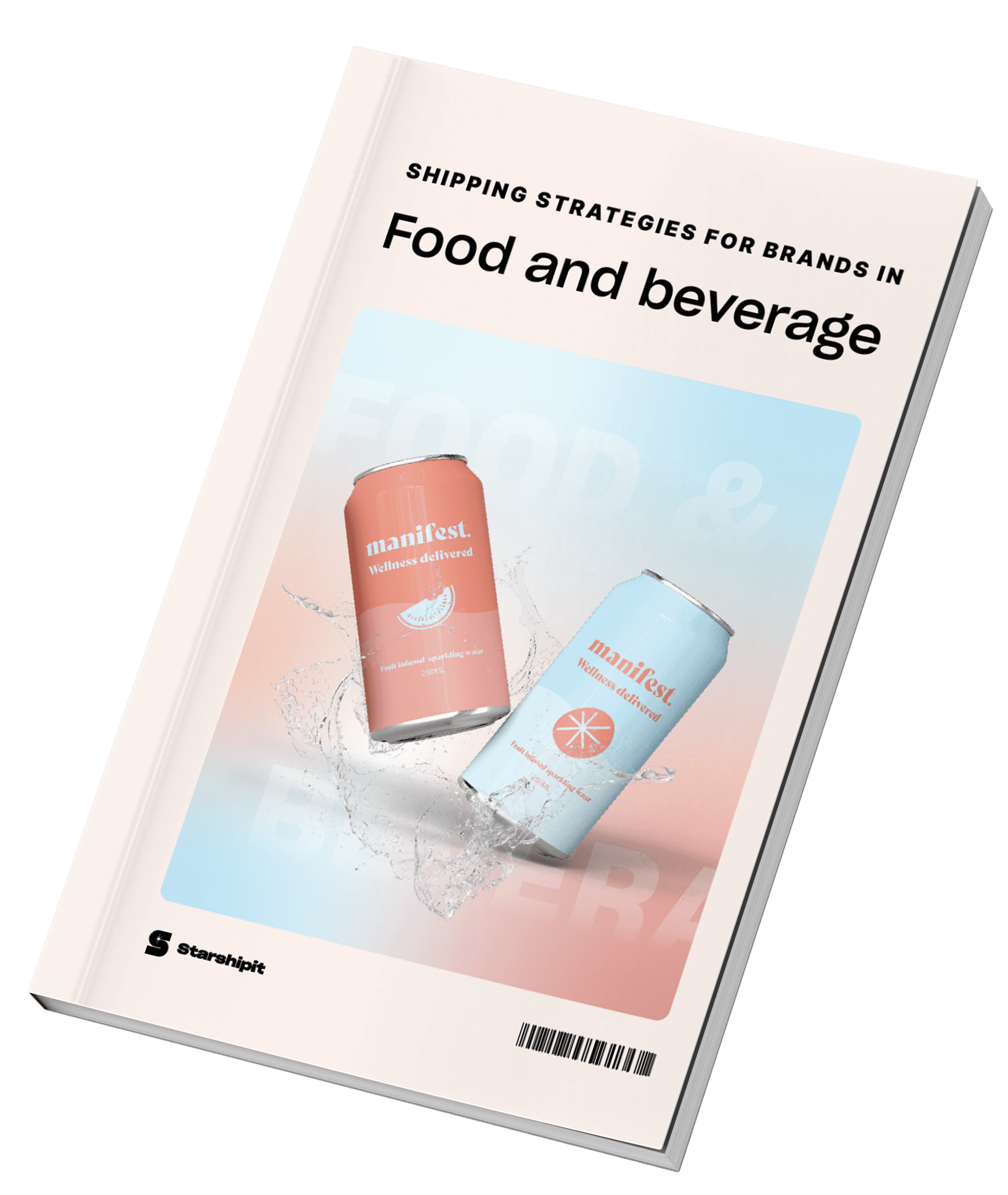
3D cover mockup for the 2025 food and beverage shipping strategies guide by Starshipit

Introduction

It's never been easier - or harder - to sell food and beverage products online.

Social media has cracked open the market. Indie brands can go viral overnight and suddenly you're seeing the same probiotic soda in every TikTok video. But this explosion of choice means the pressure is on for smaller brands and established enterprise businesses alike. When expectations are high and loyalty is low, one misstep - like a delayed delivery or broken bottle - can cost you the next sale.

Warehouse worker packing coffee bags into a cardboard shipping box for food and beverage fulfilment

Whether you're just starting out or looking to scale your established business, getting shipping right is one of the biggest levers you've got to retain customers. However, a bad delivery experience can be the number one reason shoppers don't return to your store. But it's not straightforward, and a one-size-fits-all approach is not the answer, particularly when it comes to perishable goods. Alcohol faces tight regulations, frozen foods need perfect cold-chain logistics, and every region adds its own spin. A customs slip or handling error can stop you in your tracks.

This guide will help you cut through the complexity. Keep reading to learn how you can create a checkout experience that draws buyers in, a warehouse that runs smoothly, and post-purchase communication that keeps shoppers engaged beyond delivery.

Chapter 1

Optimising the checkout experience

Offering flexible options at checkout

Your checkout is the moment to draw shoppers in, and flexible shipping options are the key. Digital360 found 60% of shoppers choose retailers with better delivery options, and utilising a multi-carrier strategy gives your customers options from a range of carriers. Think same-day and on-demand delivery for items that need to arrive cold and fresh, or budget-friendly options where time isn't as tight, like pantry staples and the likes.

3D illustration of food and beverage checkout delivery options for flexible shipping choices

Additionally, offering services like in-store pickup lets shoppers grab items at their own convenience, using the store closest to them as a fulfilment hub. Whether it's a meal kit subscription or a bulk tea order, giving customers that flexibility creates a smoother, more satisfying experience - one that keeps your brand top of mind.

Learn how

Enhancing the checkout for clarity and convenience

Providing a range of shipping options is just the tip of the iceberg when it comes to optimising your checkout for higher conversions. Go one step further by displaying live rates from your carriers - that way customers can see accurate real-time shipping costs with clear delivery times before completing their order. A good fulfilment platform will allow you to add margins on these rates, helping you avoid undercharging while still offering competitive, transparent shipping options. Providing free shipping when customers reach a certain dollar value is another great way to increase your average order value.

3D illustration showing live shipping rates for food and beverage checkout optimisation

Additionally, to ensure there are no surprises later down the track, food and beverage shipments need a crystal-clear returns policy upfront. A leaky juice bottle or spoiled meat require fast replacements, but partial use or buyer's remorse don't always pair well with perishables. Set strict eligibility criteria and display this during the checkout process - e.g. damaged goods get replaced, items neglected on your doorstep don't - so your customers know exactly what to expect. Showing clear rates and policies upfront will boost customer trust, priming your business to nail every delivery with confidence.

Learn how

Chapter 2

Mastering fresh fulfilments

International considerations and documentation

Even with freshness secured, international shipping demands rigorous compliance. Customs delays can spoil perishables if documentation isn't precise - like detailed export certificates for alcohol, or frozen goods needing temperature logs to prove cold-chain integrity. Common requirements for documentation include customs descriptions detailing product ingredients, Harmonized System (HS) codes identifying product types, and declarations of origin proving where goods are produced. To add to the complexity, regulations vary by country.

Packed food parcels on a fulfilment bench ready for dispatch and international shipping
Warehouse worker packing coffee bags for perishable food and beverage order fulfilment

Preparing the warehouse for consumables and perishables

If you're shipping things like chilled meals or alcohol, keeping products in good condition starts with how your warehouse is set up. Separate clear zones - one for chilled or frozen goods, another for dry items like wine or pantry staples so everything stays stored correctly. Then there's how you move stock. Using a Warehouse Management System with first-in, first-out logic means older items go out first, which cuts down on waste.

For example, the EU enforces strict food safety declarations, while Australia demands biosecurity clearance for some items - so it's important to do your research for each country you're shipping to. A shipping automation platform can help you spot things like missing permits early, before they cause delays by getting stuck with customs. That way, your products arrive on time and in good shape, and your warehouse team isn't stuck dealing with last-minute issues.

When it comes to packing orders, fulfilment software can automatically flag anything that's perishable, so your team prioritises it. And during peak times, batch processing helps them work quickly without cutting corners. Training staff to handle delicate items properly (and doing regular safety checks) also keeps things running smoothly. The result is less spoilage, fewer delays, and deliveries that show customers you've got things under control.

Learn how

Chapter 3

Keeping customers engaged post-purchase

Inform customers with timely notifications

Freshness demands trust, and timely updates keep customers engaged from checkout to delivery. For food and drink orders, where delays can spoil fresh produce, instant communication is key. Send an order confirmation via SMS or email right after purchase, confirming their order is processing - especially for international orders, so global shoppers are kept in the loop.

Branded order tracking and shipping notification email illustration for food and beverage ecommerce

From there, share shipping notifications, detailing when the order has been picked up by the courier and again as it hits key delivery milestones. Real-time order updates build trust, even for a delay. It also eases the pressure on your customer service teams by reducing “where's my order” queries, saving your team hours.

Learn how

Upsell and engage with an order tracking page

To deepen post-purchase engagement, use branded tracking pages to give customers an easy way to monitor their order. Offer estimated delivery times, loyalty program perks, product ideas and feedback surveys, or even recipe newsletter sign-up forms based on their order - all to keep them engaged through the post-purchase process. Pro retailers have also been spotted integrating upsell and cross-sell opportunities to inspire more sales, making personalised recommendations or suggesting a subscription for regular coffee or meal kits. When customers feel informed and valued, their trust in your brand grows, turning them into repeat shoppers.

Learn how

Chapter 4

Food and beverage retailer success stories

Bickford's: Sipping their way to premium fulfilment

For over 150 years, Bickford's has created beloved beverages, from cordials and juices to craft spirits, staying ahead by evolving alongside customer expectations. They even developed their own platform to ship orders directly to loyal fans. But over the years, growth came with more complex fulfilment challenges, more orders, and more pressure on their team.

Bickford's beverage product photography used in the food and beverage fulfilment success story

Starshipit's simple set up and intuitive interface won them over by automating multi-location shipments with ease. The platform handled shipping notifications and branded tracking to keep customers updated, while the automated address validation cut out costly returns. The payoff was huge: handling time dropped by 50%, and errors fell 10%. With logistics under control, Bickford's can focus on innovating their legacy brand for years to come.

Read the full story here

Mountain Culture brewery interior used in the direct-to-consumer beer fulfilment success story

Mountain Culture: Brewing up DTC success

After starting as a brewpub, Mountain Culture decided to take their craft beer online and ship directly to fans across Australia. As orders grew, fulfilment bogged down their small team, slowing down delivery of their fresh brews.

Starshipit stepped up to automate fulfilment, integrating with Sendle and their eCommerce platform to keep everything in one place. Shipping notifications and branded tracking pages told customers when their beer left the brewery and when it would arrive, reducing “where's my order?” queries. Starshipit allowed the Mountain Culture team to filter orders by item, saving 6-10 hours a week during the packing stage alone. Customers got fresher beer sooner, keeping them happy.

Co-founder Harriet McCready says it best: “Beer often arrives on our customers' doorsteps with condensation because it's still cold.”

Read the full story here

The bottom line

Shipping food and beverage products across borders or directly to customers comes with a fair few challenges. However, with the right processes and tools in place, it can be a piece of cake. Seamless checkouts, fresh deliveries, and engaging tracking will make every order a delight.

Now it's your turn.

By getting fulfilment right, you can unlock new markets and loyal fans, turning every delivery into an opportunity to grow. Book a demo of Starshipit with our team of shipping experts today, or start a 30-day free trial of our shipping platform to discover how you can automate your food and beverage brand to success.

Bonus

Fulfilment setup benchmarking checklist

Think you're ready to start shipping? Have a look through the checklist to see how your operations stack up, and what else you can improve.

Cheat sheet for food and beverage brands

International shipping quick tips

Shipping food and beverage products internationally can add extra challenges. Here are some quick tips:

  • Become familiar with common documents like:
    Customs descriptions: A detailed summary of the goods and their ingredients.
    HS codes: A Harmonized System code identifies the type of product it is.
    Declarations of origins: Proof of where goods were manufactured or produced.
  • Find out if you need an import or export license.
  • Check if your courier partners operate in your new destination country.
  • Read through guidelines for the food and beverage regulator in the destination country.
Customer unboxing a delivered food and beverage parcel at home

Know what you're shipping

Whether it's liquid, alcohol, or frozen meat, everything you ship has different requirements. Here are some examples of food items and things to keep in mind:

Alcohol

  • International shipping requirements depend on alcohol by volume (ABV): ABV below 24%: Not a dangerous good.
  • ABV between 24-70%: May be classified as dangerous goods depending on container size.
  • ABV above 70%: Typically classified as dangerous goods due to flammability.

Frozen food

  • Some couriers require shippers to receive approval to ship perishable items. Check with your partners.
  • Try to use express shipping options only to reduce the risk of thawing. These rules can be set up in your shipping fulfilment platform.
  • Check if your courier partner offers temperature-controlled delivery services.
  • Package items correctly: Choose insulated containers where necessary. Include freezer packs to maintain temperatures. Consider leak-proof packaging for items that may leak if accidentally thawed or damaged.