
For the complete documentation index, see llms.txt.

What are landed costs, duties and DDP in international shipping?

Aircraft at an airport terminal at sunset

Published: 2026-09-14

Written by Kendyl Morris

Summary: Landed costs include the full cost of delivering an international order, including duties, taxes and customs-related fees. DDP (Delivered Duty Paid) handles import charges before delivery; check product data, checkout pricing and carrier workflows so customers understand the total cost before they buy.

International shipping can open up valuable new markets, but it also exposes one of the biggest gaps in the customer experience: the difference between what a customer pays at checkout and what they may still need to pay at delivery.

We see this often with retailers expanding overseas. A customer places an order, pays for shipping, waits for the parcel, then gets asked to pay duties, taxes or customs fees before it can be delivered. Even when the charge is legitimate, it can feel like a surprise.

Direct answer: Landed costs are the total costs involved in getting an international order to the customer, including shipping, duties, taxes and customs-related fees. DDP, or Delivered Duty Paid, means those costs are handled before delivery, so the customer is not asked to pay unexpected charges when the parcel arrives.

That is why landed costs matter. They are not only a customs or finance detail. They affect checkout conversion, delivery success, customer trust, support workload and margin. Starshipit's Evolving Expectations 2026 report found that 65.2% of retailers cite international shipping costs as a top challenge, while 47.8% identify customs compliance as a key challenge. For growing retailers, cost transparency is part of building an international shipping experience customers can trust.

Lorna Jane warehouse aisle and forklift

What are landed costs?

Landed costs are the full cost of getting a product from your warehouse to your customer's door in another country.

  • Product cost
  • International shipping cost
  • Insurance
  • Customs duties
  • Import taxes such as VAT, GST or sales tax
  • Carrier, customs or remittance fees
  • Any handling charges linked to import processing

Customers usually care about the final amount they need to pay; not how many systems, carriers or customs authorities sit behind it. If they only see part of the cost at checkout, the rest can become a surprise at delivery.

For example, a customer in the US buys a NZ$180 jacket from a New Zealand retailer. The retailer charges NZ$25 for shipping at checkout. If duties, taxes or carrier fees are charged later, the customer may feel they were undercharged or misled, even if the retailer followed the correct process.

That is why we recommend treating landed costs as part of the checkout and delivery experience, not as an afterthought once the parcel reaches the border.

International shipping parcels and courier delivery

What are duties and taxes in international shipping?

Duties and taxes are charges applied when goods cross a border. The exact amount depends on the destination country, product type, declared value, country of origin, and local import rules.

  • HS code or tariff classification
  • Product value
  • Shipping and insurance value
  • Destination country
  • Country of origin
  • Import thresholds and exemptions
  • Product restrictions or special categories

Duties are usually linked to the type of goods being imported. Taxes are often broader consumption taxes, such as VAT or GST. Some destinations may also apply customs processing or carrier remittance fees.

If you are selling into multiple markets, it is worth avoiding one fixed duties-and-taxes assumption across every country. A beauty product, shoe, supplement, handbag and electronic device can all be treated differently. The same product may also attract different rates depending on where it is made and where it is being shipped.

Important: This is not legal, tax or customs advice. Before setting duties, taxes or customs processes for your business, confirm your obligations with a customs broker, tax adviser, carrier or official customs authority.

What does DDP mean?

DDP stands for Delivered Duty Paid. In DDP shipping, duties and taxes are paid before delivery, so the customer should not be asked to pay those import charges when the parcel arrives.

  • Duties and taxes are calculated before or during checkout.
  • The customer pays the relevant amount upfront.
  • The shipment is sent with the right DDP data.
  • Duties and taxes are remitted through the appropriate workflow.
  • The customer receives the parcel without a surprise customs bill at delivery.

The International Chamber of Commerce defines Delivered Duty Paid as a seller obligation where the seller clears goods for import and pays duties and customs formalities before delivery.

For retailers, DDP can create a clearer customer experience. It can also make margin planning more predictable because the import cost is visible earlier in the order journey, before the order is packed and shipped.

What is the difference between DDP and DDU?

DDP and DDU describe who pays duties and taxes, and when.

DDP means Delivered Duty Paid. The seller handles duties and taxes before delivery, usually by collecting the cost from the customer upfront or absorbing it into the price.

DDU means Delivered Duty Unpaid. The term is older and is often used informally in eCommerce to describe a receiver-pays model. In practice, the customer may be asked to pay duties, taxes or fees when the parcel reaches the destination country.

ModelWho pays duties and taxes?When are they paid?Customer experience
DDPRetailer/sender handles payment, often collected from customer upfrontBefore deliveryCustomer has clearer total cost before the parcel arrives
DDU/receiver paysCustomer pays on arrivalAt import or deliveryCustomer may face unexpected charges, delays or refused delivery

DDU can still be appropriate in some cases, especially if your business is not set up to calculate or remit duties upfront. But it does create more friction for the customer. A customer who has already paid for the order may not expect a second payment before delivery.

Why do unexpected duties hurt customer experience?

Unexpected duties create a trust problem.

  • From the customer's point of view, the order was already paid for. If a carrier asks for more money before delivery, they may think:
  • The retailer hid the real cost.
  • The shipping price was inaccurate.
  • The order is more expensive than expected.
  • The delivery is delayed or difficult.
  • Buying internationally from that retailer is not worth it again.
  • For your team, surprise duties can lead to:
  • More support tickets
  • Refused deliveries
  • Delayed parcels
  • Returned orders
  • Negative reviews
  • Lower repeat purchase confidence
  • Margin pressure if the retailer chooses to reimburse the customer

This is why checkout transparency matters. International customers need to understand the total cost before they commit. If duties and taxes are not shown at checkout, your checkout and shipping policy should clearly explain that the customer may need to pay import charges on arrival.

How can you show duties and taxes at checkout?

You can show duties and taxes at checkout by connecting product, order, carrier, and destination data before the customer pays.

  • Accurate product descriptions
  • Correct HS codes
  • Country of origin for each SKU
  • Product value and currency
  • Shipping cost
  • Destination country and postcode
  • Carrier and service details
  • Checkout rates or a landed cost calculation tool

The goal is to move from estimated or hidden import costs to a clearer landed cost before purchase.

Start with your product catalogue. If HS codes or country-of-origin data are missing, duties and tax calculations can be inaccurate. This is especially important if you have a large catalogue, bundles, variants or products made in different countries.

Then review the checkout experience. Customers should be able to see whether duties and taxes are included, excluded or payable on delivery. Use plain language. "Duties and taxes included" is clearer than a technical customs note buried in the footer.

Finally, make sure the shipping workflow matches the promise at checkout. If you collect duties and taxes upfront but send the order with the wrong customs data, you can still create delivery friction.

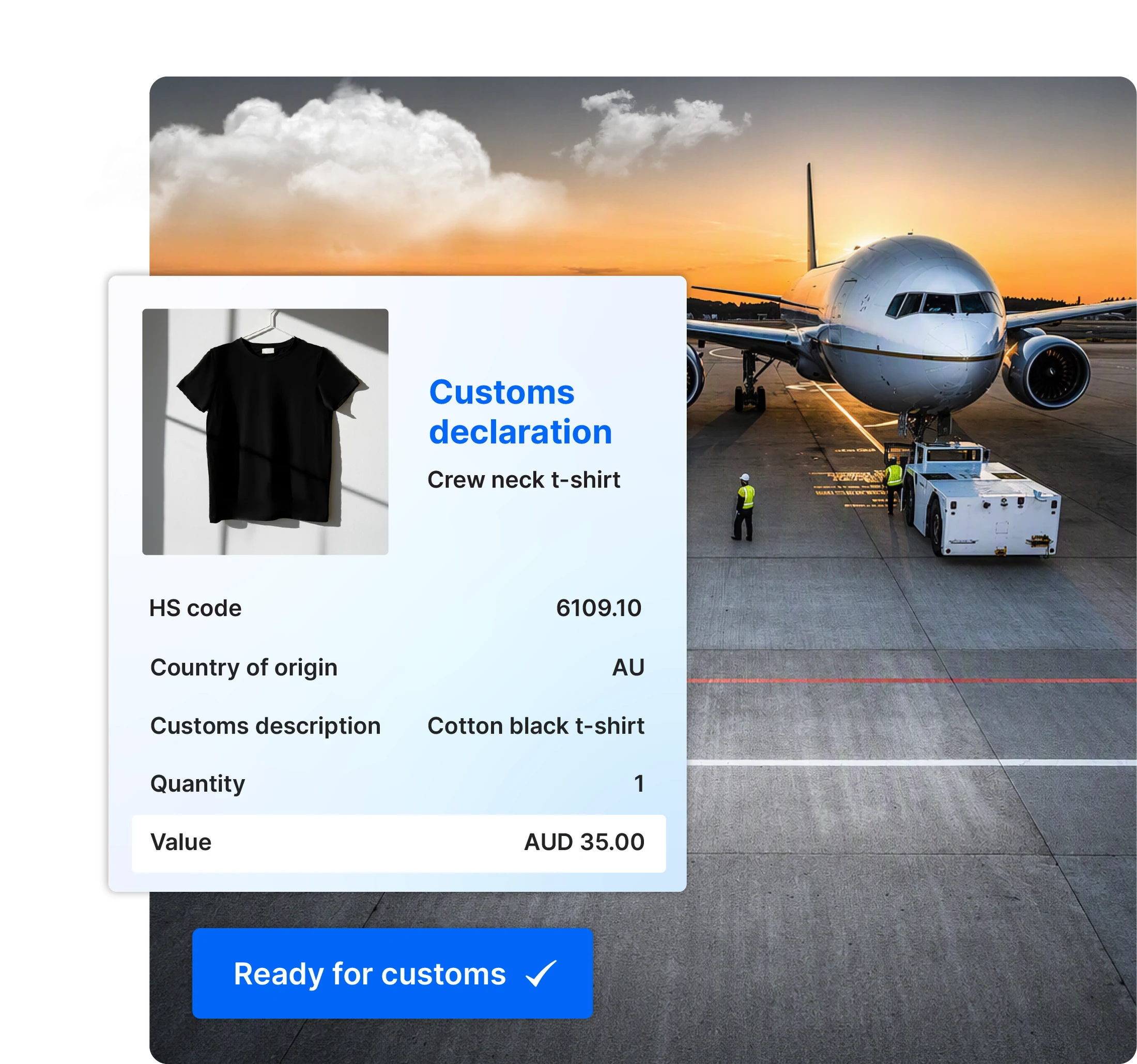
Checkout illustration showing duties and taxes in the total order cost

How does Starshipit Landed Costs work?

Starshipit Landed Costs helps you calculate and display duties and taxes at checkout, collect payment upfront and support Delivered Duty Paid (DDP) shipping for supported markets and carriers.

It brings landed cost calculation, checkout visibility, customs payment workflows and billing into Starshipit, so your team can manage international shipping from one platform instead of adding another account, invoice or disconnected process.

With Starshipit Landed Costs, you can:

  • Calculate duties and taxes at checkout
  • Show customers a clearer landed cost before purchase
  • Collect duties and taxes upfront
  • Support DDP workflows for supported markets
  • Use supported carriers, subject to service availability
  • Reduce surprise delivery charges for customers
  • Keep duties, taxes and international shipping workflows in Starshipit

If you already use Starshipit for international shipping, this helps reduce manual work around duties and taxes while giving customers a clearer cost before they buy.

Landed costs checklist for retailers

Before you offer international shipping at scale, check:

  • Do you know which markets you want to ship to first?

  • Are your HS codes and countries of origin complete for key SKUs?

  • Do you know which products are restricted or treated differently by destination?

  • Are duties and taxes included at checkout, excluded, or payable on arrival?

  • Does your checkout copy explain this clearly?

  • Can your carriers support the DDP workflow you want to offer?

  • Have you tested the customer experience from checkout through delivery?

  • Do support and sales teams know how to explain duties, taxes and DDP?

  • Have you confirmed duties, taxes and customs wording with the right adviser before publishing it to customers?

International shipping becomes easier to scale when you stop treating duties and taxes as an afterthought. Landed costs give your team and your customers a clearer picture of the real cost of delivery.

Conclusion

Landed costs help you understand the full cost of an international order before it reaches the customer. Duties, taxes, customs fees and carrier charges can all affect the final amount, so showing those costs clearly at checkout can protect customer trust and reduce delivery friction.

If you are expanding internationally, DDP shipping and landed cost transparency can make cross-border growth more predictable. To show duties and taxes upfront from one platform, explore Starshipit Landed Costs or talk to one of our shipping experts.

FAQs

What are landed costs in eCommerce?

Landed costs are the total costs of getting an international order to your customer. They can include product cost, shipping, insurance, duties, taxes, customs fees and carrier remittance charges.

What does DDP shipping mean?

DDP shipping means Delivered Duty Paid. Duties and taxes are paid before delivery, so the customer should not receive an unexpected bill when the parcel arrives.

What is the difference between DDP and DDU?

DDP means duties and taxes are handled before delivery. DDU, often used informally to mean receiver-pays, means the customer may need to pay duties, taxes or fees when the parcel reaches the destination country.

Are customs duties the same as taxes?

No. Customs duties are usually based on the type, origin and value of goods. Taxes, such as VAT or GST, are broader consumption taxes applied by the destination country.

Why should I show duties and taxes at checkout?

Showing duties and taxes at checkout gives customers a clearer total cost before they buy. It can reduce surprise delivery charges, refused deliveries, support tickets and loss of trust.

Can Starshipit calculate landed costs?

Yes. Starshipit Landed Costs can calculate and display duties and taxes at checkout, collect payment upfront and support DDP workflows for supported markets and carriers.

Ready to start automating?

Automate your entire shipping process while delivering better experiences for your customers.

Start 30-day free trial
Kendyl Morris

Kendyl Morris

Kendyl Morris is an author and strategic advisor in shipping and fulfilment. She leads shipping and eCommerce research at Starshipit, drawing on more than 30,000 data points to uncover trends in delivery, fulfilment and customer expectations. She translates those findings into practical guidance that helps retailers strengthen shipping operations and make informed decisions about growth. Connect on LinkedIn.

More from this author