


August 10, 2026
How to choose a warehouse management system for eCommerce
Choose the right eCommerce WMS with a practical checklist for inventory, picking, shipping...
Read now
For the complete documentation index, see llms.txt.
Published: 2026-05-18
Written by Kimberley Hughes
Summary: Starshipit WMS connects inventory control, warehouse workflows and multi-carrier shipping in one fulfilment platform. Bringing picking, packing, labels and stock data together helps teams reduce duplicate work, keep inventory accurate, move orders faster and manage fulfilment from fewer disconnected tools.
After years of helping over 30,000 retailers and logistics providers get their shipping right, we've built the other half of the operation.
Starshipit Warehouse Management is officially here.
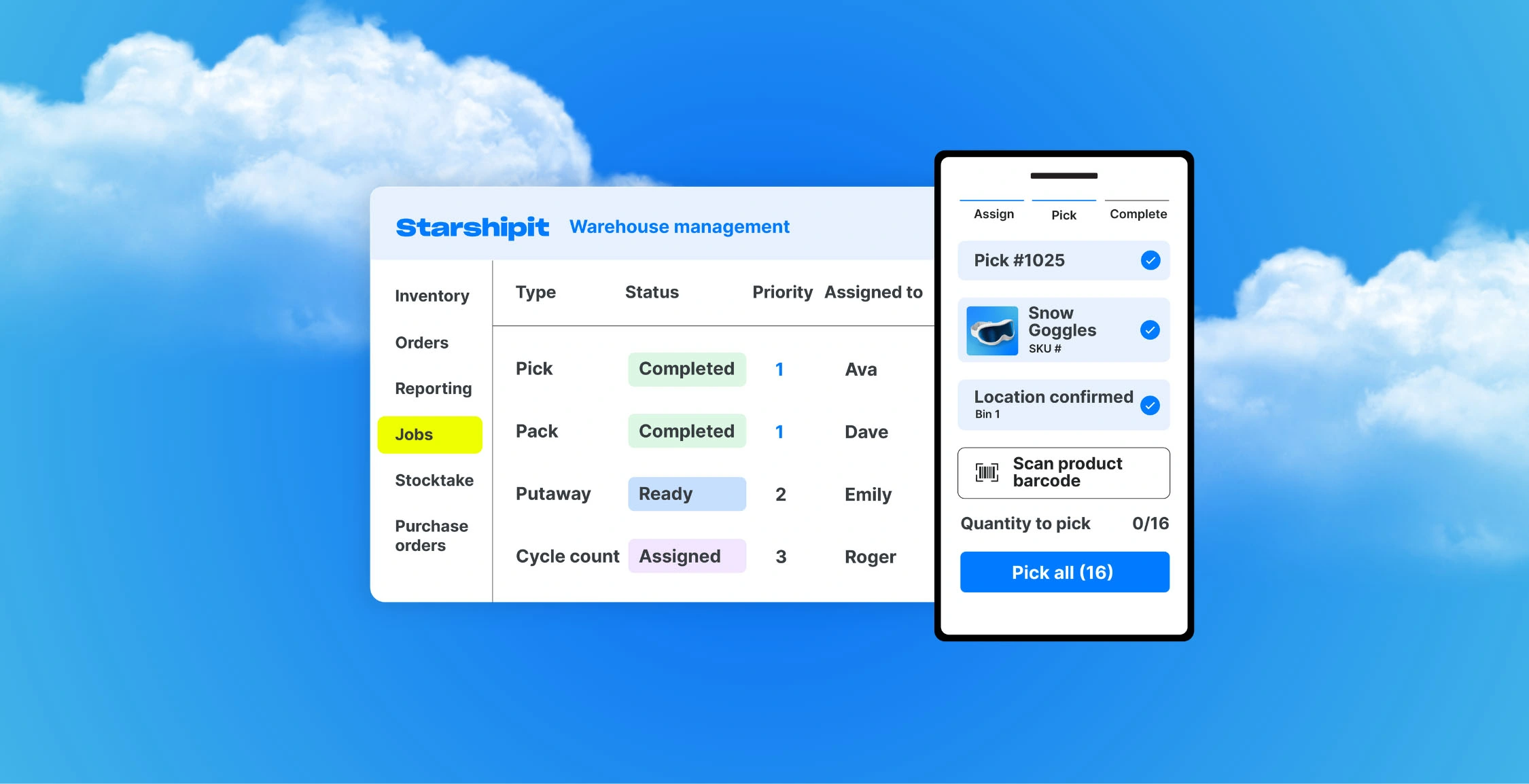
Inventory control, warehouse workflows, and multi-carrier shipping, natively built into the platform you already use.
No new vendor. No integration project that takes months. No separate system to manage when something goes wrong.
Most fulfilment stacks weren't designed; they were assembled. A WMS here, a shipping tool there, an integration holding it all together that quietly breaks when you need it most. We built Starshipit WMS to remove that problem entirely, and now it's available to all customers.
The fulfilment software market has a well-documented complexity problem. Businesses at growth stage are expected to stitch together inventory management, warehouse execution, and shipping tools. Often from different vendors, with different data models, syncing via point-to-point integrations that quietly break under pressure.
When we talk to operations teams across the market, four problems come up consistently:
Running a WMS and a shipping platform as separate systems creates constant operational overhead. Data gets duplicated, stock levels lag, and when an order ships, the WMS doesn’t always know. When a return comes in, inventory doesn’t always update.
The result is a team that spends as much time managing their tools as actually running their warehouse. Lack of stock visibility, i.e. not knowing what you truly have on hand, what’s committed, and what’s available, is consistently the number one pain point we hear from operations teams.
Many of the WMS platforms that dominate the mid-market were built for a different era. They’re powerful in theory, but clunky in practice. This means dealing with interfaces that haven’t kept pace with modern UX expectations, workflows that require significant training, and a day-to-day experience that frustrates warehouse teams rather than supporting them. When your WMS is hard to use, your team works around it. And workarounds are where errors live.
Traditional WMS implementations are not quick. They involve scoping exercises, data migrations, configuration projects, and go-live timelines measured in months. For a growing business that needs to fix a fulfilment problem now ahead of a peak period, a warehouse move, or a growth spike, that timeline is a dealbreaker. The cost isn’t just the implementation fee, but also the operational drag in the meantime.
Offshore support models, long ticket queues, and account managers who rotate every six months are a common complaint across the WMS category. When something breaks in your warehouse at 8am on a Monday before a big dispatch run, the last thing you need is to log a ticket and wait 48 hours. Local, responsive, knowledgeable support isn’t a nice-to-have in this space. It’s part of the product.
Starshipit WMS was designed from the ground up to solve all four of these problems simultaneously. Not by adding features to a shipping platform, but by building a warehouse management system that is natively embedded in Starshipit. Meaning it shares the same data layer, the same UI, and the same support team as the shipping product you’re already using.
Here’s what that means in practice:
Your warehouse data and shipping data share a single source of truth. Stock levels update in real time as orders are picked and packed. Dispatch triggers automatically when packing is complete. There’s no sync to configure, no reconciliation to run, and no moment of uncertainty about whether your stock count actually reflects what’s on the shelf. For businesses currently running a separate WMS alongside Starshipit, this means removing an entire integration from your stack along with the overhead, cost, and fragility that comes with it.
Starshipit WMS is built to handle serious operations like multi-warehouse environments, high-volume fulfilment, 3PL multi-client management, kitting and bundling, batch and serial inventory tracking, demand-driven replenishment, and more. But it’s also designed to be used by the people actually on the warehouse floor, not just the systems team that configured it. Clean UI, intuitive mobile workflows, and barcode-driven execution that guides your team through every task rather than leaving them to figure it out.
Because the WMS is built into Starshipit, there’s no separate vendor to contract, and no integration project to scope. If you’re already a Starshipit customer, you can activate a free trial directly from your account and be operational faster than most traditional WMS implementations would allow. Guided onboarding walks your team through setup, whether you’re starting with inventory tracking only, pick and pack, or a full WMS rollout.
Starshipit is rated 4.7 on G2 and above 4 on the Shopify App Store, so when something needs resolving before the morning dispatch run, you can talk to people who know the product, know your market, and can actually help. One platform also means one support relationship, and no more bouncing between your WMS vendor and your shipping provider trying to work out whose problem it is.
Starshipit WMS covers the full lifecycle of warehouse operations, from the moment stock arrives to the moment it leaves:
Starshipit WMS was adopted by a sample group of Starshipit customers since late last year, and the results are clear. These retailers have reported faster fulfilment, fewer errors, and significantly less operational overhead from day one. Warehouse teams that previously relied on disconnected systems and manual processes now have a single view of their inventory, structured workflows guiding every pick and pack, and shipping connected directly to the same platform.
For operations that migrated from established WMS providers, the feedback has been consistent: easier to navigate, faster to learn, and more intuitive for the people actually using it on the floor.
The product you’re seeing today reflects real feedback from real warehouse teams, from growing direct-to-consumer brands through to enterprise operations and third-party logistics providers.
Starshipit’s product team ship new features in weeks, not quarters. The roadmap is driven by what retailers actually need in the warehouse, not by a team working in isolation, and that pace of development has been one of the things early customers have noticed most.
"Starshipit WMS is an absolute game-changer that streamlines inventory, fulfilment, and shipping with incredible ease and reliability. Its intuitive interface and powerful automation save time, reduce errors, and make scaling operations feel effortless."
— Jesse M, Willow Workspaces & Fulfillment

Starshipit WMS is built for businesses at the point where basic inventory tools stop being enough. Not a specific size or sector, but a specific moment. Here’s who we built this for:
Starshipit WMS is available to all customers now.
Already on Starshipit? Simply log in and start a free 7-day trial directly from your account.
New to Starshipit? Activate WMS as part of your 30-day free Starshipit trial and manage your shipping and warehouse operations in one platform.
Keen to talk it through first? Reach out to our team to discuss the best setup for your business. We’ll help you work out whether WMS is the right next step for your operation right now, and what getting started actually looks like for your specific needs.
Kimberley Hughes
More from this author